|
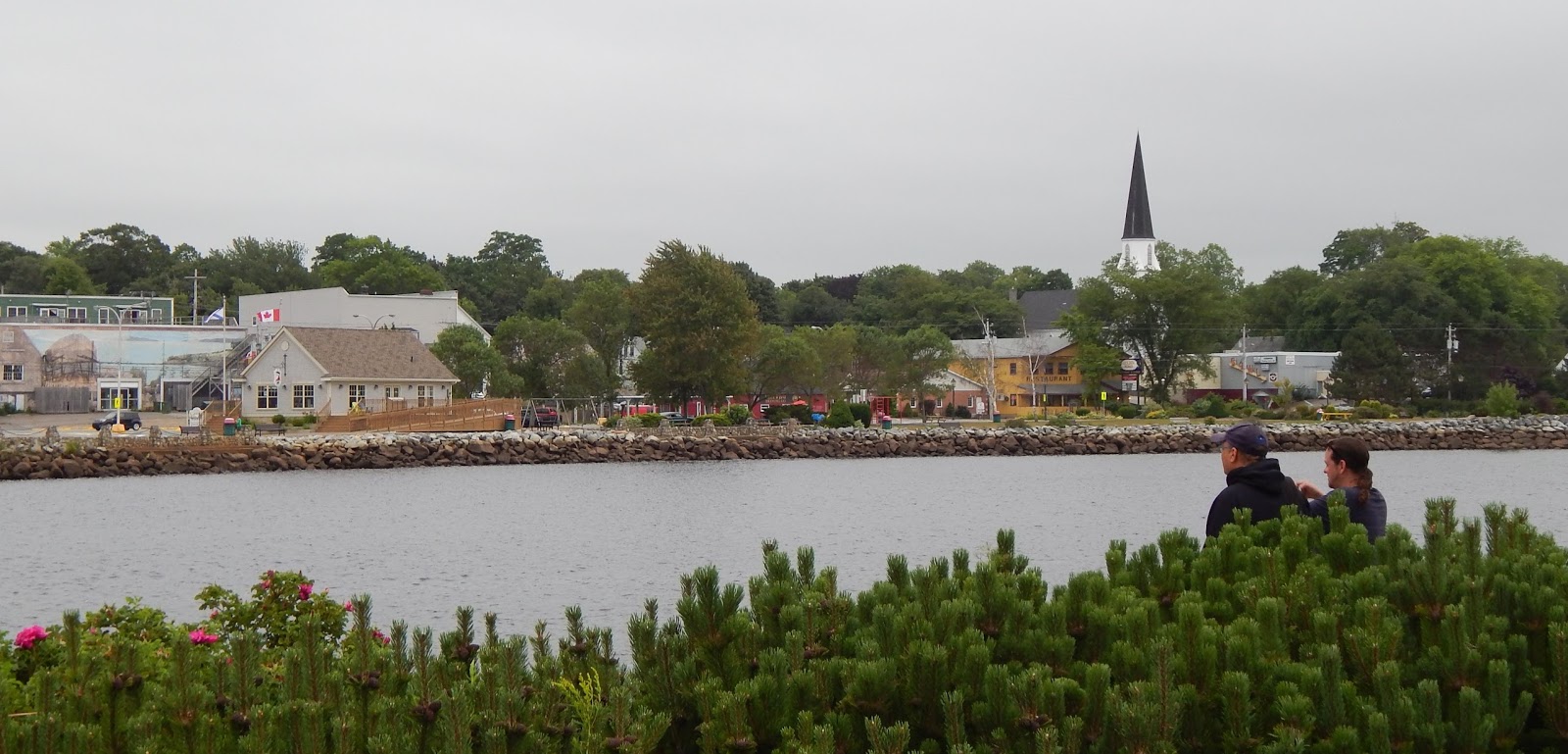
Yours truly by the castle at Český Krumlov, 2009.
|
One of the fringe
benefits of shooting a television series on the road is that you can always
build a vacation into the process, which is exactly what Holly and I did in late May and
early June of 2009 once we had finished filming the four episodes of Ghost Cases in the United Kingdom.
After all, we were already there, which meant that we didn’t have to pay for
the airfare from Canada to Europe, so we took advantage of the situation. In
many ways it had been a stressful eight months since we had begun production on
Ghost Cases, much of it a carry-over from the Eternal Kiss shoot, so Holly and I were definitely
looking forward to some time to decompress.
After we bid adieu to our
good friends Dave Sadler and Steve Mera in Manchester we made our
way south via London to the small village of Gillingham in Dorset, where we
spent a couple of days with my old friend and colleague Will Fraser, who had hosted The
Classical Now a few years back. With Will as our gracious
host and tour guide we visited the ancient sites of Stonehenge, Woodhenge, and Avebury, as well as Salisbury, where we all climbed to the top of the Cathedral (and I also got
to see the grave of former British Prime Minister Edward Heath, which I’m pretty sure I found more interesting than either Will
or Holly did). I remember at one
point, as we wandered about the Cathedral, that Holly made a joke about how we
were still spending most of our time with dead people. We both had a good
laugh.
After our stay in Gillingham
Holly and I headed back to London
where we saw five musicals in four nights (for those keeping score, the
musicals were: Wicked, Phantom of the Opera, The Lion King, Les Miserables, and, on the spur of the moment, the final performance
of Joseph and His Amazing Technicolour
Dreamcoat at the Apollo Theatre, which blew the lid off the joint). We
toured Buckingham Palace, Trafalgar Square, Baker Street, the British Museum,
The Tower of London, and the Imperial War Museum, and also attended the lecture
at the RSA by Michio Kaku that I discussed earlier.
From London it was off to
Scotland, where I had studied in 1987 and 1988 whilst an undergraduate student.
Back then I spent almost all of my time in the eastern part of the country at
the University of Dundee and the surrounding region,
so this time I decided to see what the western side had to offer. We flew into
Glasgow, rented a car, and made our way up through Loch Lomond and Crianlarich
to the Highlands, where we walked amongst the Three Sisters and Glen Coe, and then
caught a ferry from Oban to the mystical Isle of Mull.
Three days on Mull based
in Tobermory provided for some great whisky, a couple of castles, some ancient
standing stones in Lochbuie and castle ruins at Aros, hill-walking galore, and
a day on the Isle of Iona, which is one of those places that everyone should try to visit
before they shuffle off this mortal coil. I also made sure to visit
every cemetery and burial ground that I could find because I’ve always been
drawn to the history that one can discover there, and the connection you can
make with the past. Luckily I had a great traveling companion who felt the same
way, or was at least willing to indulge what many other people might consider
my ghoulish interest in the final resting places of the dearly departed.
Our trip back from Mull took us through Inverary,
which was beautiful. We then spent two days and nights in Glasgow where we
wandered the streets, poked about more old churches and cemeteries, drank some
great beer, and unfortunately went to see Terminator:
Salvation, a truly dire film. Still, that evening had a memorable moment.
Before we went into our theatre in the multi-level cinema complex we popped by
the bar for a beer. As we sat there chatting I noticed that there was a small
black spot on my leg (I was wearing walking shorts). I took a closer look and discovered
a heretofore unnoticed tick that I had picked up whilst hill-walking the day
before. It was the second one on the trip; before we left Mull, the very nice lady who ran the bed & breakfast in which we
stayed had removed another one that was… well, let me just say that it was too
close for comfort for any man!
Having observed our
host’s technique for safe tick removal in Mull Holly said she would help me out.
I figured it could wait until we got back to the hotel after the movie so we
went in and found a couple of good seats. After five minutes of sitting in the
theatre, however, I couldn’t stop thinking about the bloodsucking little devil,
so I asked Holly if we could get rid of it before
the film started. We went out to the lobby where we quickly realized that we
would have to use the child changing room given that she couldn’t go into the
male washroom and I couldn’t go into the female washroom (a lesson I once
learned the hard way after a night of heavy drinking in San Juan, Puerto Rico).
We waited until the coast
was clear and then snuck into the room and locked the door. I can only imagine
what the people who were walking by must have thought when they heard the
following rather animated conversation coming from inside.
“Do you see it?”
“It’s so small”
“I can see it from here, and you’re kneeling right next to
it – how do you not see it?”
“Okay, there it is. I’ve
got it… I’ll just give it a twist.”
“Be careful!!
“Does that hurt?”
“Ow!!!”
When we eventually exited
the changing room there was a small crowd gathered in the hallway, evenly split
between those patrons who thought we were horrible people engaged in some sort
of carnal escapade, and those who thought we were really cool people engaged in
some sort of carnal escapade. I admit that I did nothing to disabuse them of
their notions as we went back into the theatre. For those who were unfortunate
enough to join us for Terminator: Salvation,
at least we had provided some entertainment.
As our time in the United
Kingdom drew to a close we flew down to London and stayed overnight at Heathrow
before our flight early the next morning for the final destination on our grand
adventure, the Czech Republic. Neither Holly nor I had ever been on the
continent of Europe before, so we had debated where we would spend our last
week on vacation. Romania was a contender because we both thought hiking
through the mountains around Cluj and checking out the land of Dracula would be great fun. Greece
was also a place we considered, for more leisure-oriented reasons, as was Italy,
but we eventually settled on Prague, which came highly recommended by a number of our friends back
home who had been there.
I’m sure Romania, Italy
and Greece would have been wonderful (and I plan to visit all three someday),
but we made a good call with the Czech Republic, where we had an amazing time. We spent the first five days in
Prague, walking around the city for hours each day. Part of the charm and
romance of Prague is getting lost on a
walkabout, and we certainly managed to “misplace” our bearings on more than one
occasion. One local I chatted up while asking for directions congratulated me
on being so far from where I thought I was and then told me that if you didn’t
get lost in Prague you hadn’t really been
there, which I thought was pretty zen.
We popped into myriad
shops and cafes and restaurants, and toured the magnificent Prague castle, where the Kings
of Bohemia, the Holy Roman Emperors, and the presidents of Czechoslovakia and the Czech
Republic all held “court”. We also attended
enthralling performances at the State Opera (Prokofiev’s ballet Cinderella)
and the National Theatre (Dvorak’s Rusalka, which I mentioned earlier), and I managed to catch a little
black light theatre while Holly was doing some shopping for
her mother.
While we were based in
Prague, we also wanted to see some of the rest of the Czech Republic, so we took two day-trips outside of the city. The first sojourn
was to Terezin because I wanted to visit
the former concentration camp. It was a very moving place, and both Holly and I came away with a
different perspective on our world after spending the day there. We also
continued our habit of poking about in places where we weren’t supposed to go
when we opened a door and walked into a series of dark tunnels which ran
underneath the fortress. Eventually we made our way out to what had once been
the grounds on which prisoners were executed by firing squad. Only when we
looked behind us did we notice the sign indicating that the tunnels were off
limits, presumably for safety reasons.
For the second day trip
we hopped a train to Kutná
Hora, where we immediately made our way to the famous Sedlec ossuary, which contains the skeletons of between 40,000 and 70,000 people
(a wide margin of error, but at some point when you’re piling up skeletons I
imagine you lose count). It was definitely a creepy place, with skulls and
bones placed everywhere. As we walked out I once again thought to myself that
for two people who were trying to decompress from several months of ghost investigating we were
certainly spending a lot of our time in places where you would expect a few
ghosts might be lingering.
We had some wonderful
goulash for lunch and then took a tour of an old mine that was so dark and
confined I was sure I was going to get stuck underground (having had a double
portion of the goulash probably didn’t help as I tried to navigate the tightest
spots). I don’t like dark, confined spaces, so it was definitely a “confront
your fears” moment. Finally, we visited Saint
Barbara's Church, one of the most famous Gothic churches in central
Europe and a UNESCO world
heritage site. Somewhere along the way Holly managed to get us lost. As
with our rambles in Prague, however, her error in Kutná Hora led to something we wouldn’t
have otherwise seen – a beautiful field of tulips on the other side of town,
far from the regular walking routes taken by tourists.
Holly and I decided to spend the
final two days of our trip in Český
Krumlov, a small city in the South Bohemian
Region of the Czech Republic best known for the
fine architecture and art of its historic old town and
the State Castle of Český Krumlov, second only to the castle at Prague itself in size and splendor.
I love riding trains so I convinced Holly that we should take the
four hour train ride to Český
Krumlov instead of what would have
been a somewhat shorter trip by bus. It was a bad decision. The train was old,
which was great, but it was musty, which aggravated my hay fever. Opening the
window made it even worse as it was the beginning of June and pollen was everywhere.
I spent four hours with watery eyes, a runny nose, and more than one roll of
toilet paper next to me by way of tissue paper. To her credit, Holly never once said, “I told
you so.” Of course, she spent most of the time sleeping, which is probably what
I would have done if I had been her sitting across from a de facto Snuffleupagus.
I had booked us a double
room at the Pension Ve Vezi, an inn shaped like a small wizard’s tower about a ten minute
walk from the castle and another five minutes from the old town. Unfortunately, when we got
there things went from bad to worse. The new owner of the inn, who had taken
over after I made the reservation two months earlier, had placed us in a room with
only one bed, and all of the other rooms were occupied. He apologized profusely
for the error and assured us that he would switch us to the room with two beds
that we had reserved the next evening, but this still left us in a bit of a
quandary.
We could have moved to
another inn, but it was late in the afternoon, we had just arrived in town, I
was still suffering from hay fever, and we really liked the Pension Ve Vezi. After all, who wouldn’t want to spend a couple of nights in a
wizard’s castle? We told him that the arrangements would be fine, and he
reimbursed the cost of the difference in rooms and gave me a break on the total
price by way of apology, which was a nice gesture that I appreciated.
Holly and I made our way up the
winding staircase to our room. It was quite cozy, and would have been great for
a couple, but we were not a couple,
so someone was going to have to sleep on the hard floor. Holly offered to do so, but I am
nothing if not a gentleman, so I insisted that she take the bed. With a smile
on my face I assured her that as a Star
Trek fan I fancied the idea of
sleeping on a good, solid floor, just like a Klingon warrior would. I’m pretty
sure that she didn’t believe me, which might have had something to do with the
way I kept looking down at the floor and wincing, but I was insistent and she
eventually agreed.
As it had been hours
since we had eaten we decided to take a walk through our section of town, past
the castle, across the bridge that spans the Vltava River, and into the old town square, which was ringed with hotels and
restaurants. Despite our grumbling stomachs we couldn’t help but meander
because there was so much to see. There were cubby-holes, narrow lanes, and
winding side-streets that made Prague look like wide-open Los
Angeles by comparison, and we were
drawn down more than a couple of alleyways by the sight of an interesting
looking shop or building.
As we walked along, I
turned to Holly and said, “Now this is a place where we should have
come to look for ghosts.”
She nodded, and then
replied, “Maybe we’ll see some while we’re here.”
I just shook my head, smiled
and said, “I certainly hope not. I’m retired from ghost hunting.” Before she could
answer, I began to imitate Dave Sadler in a most exaggerated
manner, and she broke out into laughter.
We eventually made our
way to Lazebnicky bridge where we got a great look
at the castle, which was perched precariously on top of a rocky outcropping like
something out of a fairy tale. The bridge itself is fairly short, with statues
of various religious figures on the sides, including a very impressive one of
Jesus framed with the castle as a
backdrop.
We found a nice
restaurant in the town square and plunked ourselves down on the patio. A very friendly
waitress came by and immediately made us feel at home. She recommended the
goulash, which was fine by me. Holly and I each ordered what
turned out to be really good Czech beer and settled in for a couple of hours of
great food, people-watching, and conversation, during which we conducted a
spirited recap of our zany adventures.
One of the subjects that
came up was the question of whether she and I might be carrying any “negative
energy” (for lack of a better term) from our ghost investigating. Perhaps even
more ominous, we considered the possibility that by opening the door as we did
time and again to “contact,” maybe we had allowed something unwanted to come in
and attach itself to us, something about which we had been warned by more than
a few people we had met over the preceding months.
Holly had discussed this subject
at our blog a few months previously when she wrote:
There's always a risk you'll get burned when
playing with fire, and the idea of a spiritual realm is definitely a
metaphorical fire, if not a literal one. Paul and I have joked from the
beginning about having to travel to Peru at the end of the series to be
"cleansed," but perhaps there is more truth there then I initially
realized. I've never doubted the significance the unknown can play on a
person's physical, emotional, and spiritual well-being, and with that
knowledge, I have entered the world of "ghost hunting" with my eyes wide open, so to
speak. However, being aware of the unknown doesn't make one any better equipped
to deal with it. With the number of completed episodes mounting, and
unexplained experiences increasing, I've recently redirected my research back
to this idea of "aura cleansing." Just in case.
As the conversation
continued I casually mentioned to Holly that I knew a priest back
in Canada who was an expert on exorcisms, and that perhaps he could save us the
price of a trip to Peru, or some of the other destinations we had considered
for some sort of shamanistic retreat. She thought it would be a good idea,
although she still wanted to test the transformative powers of ayahuasca.
 |
Holly enjoying a local beer at
dinner; behind her is the town square.
|
“If it helps break down
the walls we erect and allows our own minds to battle the demons we all have within us,” she
said to me, “then paranormal or no, I'm all for it.” I
agreed, even as I wondered whether some cheap Czech absinthe might do the trick
just as well. Still, a trip is a trip, and all doors open to the same pathway
of elevated consciousness, which is something I either heard Jim Morrison say once or read
on the wall of a dingy bathroom in an even dingier bar in northern Alberta. But
I digress…
As I chatted with Holly I thought about relating an
anecdote from Three Men Seeking Monsters, by my good friend Nick Redfern. In chapter nine,
the Bard of Birmingham recounted a meeting he had with an alleged witch named Sarah
Graymalkin. “You don’t realize that while you are looking for
these things,” she told him, “believing in them and telling others about them
who also become emotionally charged believers, they are manipulating you and
your followers as a food source.”
In the end, I decided to keep that tidbit of information to myself,
particularly as our own “food sources” has just arrived.
Speaking of Nick, he and I had discussed the question of being
“stalked” over margaritas in San Juan, Puerto Rico, in 2005. We were there investigating the legend of
the chupacabra for my
documentary Fields of Fear, and had just spent the day interviewing a number of
people in rural areas who claimed to have seen the alleged vampire-like
creature. One in particular stood out for me because he was convinced that the
chupacabra was actually a demon from hell sent
to torment him. I remember asking Nick as we sat on the hotel patio next to the
Caribbean Sea whether he ever got worried about the forces that we might be
dealing with.
Nick thought about
it for a moment, then smiled and shook his head.
“Bring ‘em on,” he
said defiantly.
I wasn’t quite
sure whether he meant the forces of evil, or another drink, as he had just
finished his margarita.
The interesting
thing about the chupacabra, as I look back on our adventures in Puerto Rico, is that it easily fits within the “performance art” interpretation of the paranormal. I think the vast majority of sightings of the
alleged creature have simple prosaic explanations, but there were some cases
recounted to us that were far more bizarre than just a few chickens being
attacked in a cage by what was surely a wild dog. For example, a man named
Pucho and his family told us about seeing a strange, shadow-like creature that resembled
a huge bird. His account was not all that dissimilar to what I experienced at
St. Edith’s church in Shocklach, and the link is made even more interesting by the
fact that Pucho’s sighting occurred next to a small rural church (The Church of
the Three Kings). Pucho ascribed it to the chupacabra because that was the meme
his culture had created as a sort of “one size fits all” explanation for weird
happenings, whereas with my interest in science fiction my first thought had
been some sort of Star Trek-like trans-dimensional void. But what we both described
was more or less the same thing.
With this on my mind
Holly and I finished our dinner
and then meandered through the streets of Český Krumlov for about an hour, during
which time I noticed a toy store that intrigued me because all of the toys were
made locally and by hand. I filed a mental note to stop by the next day and see
if there was anything there that would make a good gift for friends or family
back home, particularly my niece and three nephews.
By the time Holly and I made it back to the
wizard’s castle it was about 10:30 pm. We chatted for a little while as I
tested the floor, which I discovered was every bit as hard as it looked. Holly gave me all but one of her
blankets, which provided at least a bit of separation and cushion from the
floor, although it was a far cry from the comfortable beds that I had gotten
used to on the trip. Around 11:20 pm we turned out the lights, intent on
getting an early start on our sight-seeing the following day.
Within a couple of
minutes I realized two things. First, the less time I spent lying on the floor
the better, because I’m definitely more Ferengi than Klingon. Second, my hay
fever was still acting up, which added insult to injury (I think it was
probably the dust on the floor). After a few minutes of trying to get
comfortable, and not sniffle every five seconds, I gave up. I turned on one of
the lights and told Holly that I needed to go for a
walk to clear my sinuses. She asked me if I wanted her to come along but I said
that I would be okay. After all, how much trouble could I get in on a weeknight
in a beautiful and peaceful town like Český
Krumlov?
I wandered out into the
night and stood in the small garden next to the inn. I let the cool breeze waft
over me for a few moments which definitely helped clear up the sinuses. The
area was completely deserted as I started to stroll down Pivovarská. I had my MP3 player with me and I was listening to some
Radiohead as I passed several
buildings on my left and trees on my right. After a few minutes I reached Latrán, the
street which cut through the center of the town. I hung a left and headed
towards Lazebnicky bridge across the Vltava River and the town square on the
other side.
Despite not being very late, at least by my reckoning, there
wasn’t another person out and about, which I guess wasn’t surprising given the
fact that it was a Monday evening in early June, before the real height of
tourist season hits the town. A few lines from an old song I had written years
before but never recorded suddenly came to me as I took in my surroundings:
The streets
are quiet in this old town
the bars are
closed and the girls have gone home,
The streetlights
shine, from end to end,
and I wonder about the message that they send…
As I ambled along,
stopping to look into shop windows or down darkened alleyways, I played a
little game that I often engage in whilst on a walkabout where I sort of
experiment with time travel, at least as a concept. I look at a place further along on my route
and take a moment to imagine myself standing there. I continue on until I reach
that point, and then look back at where I was and remember myself from that
time. Sometimes it almost seems like I can see myself in the future, and then
in the past.
By the time I reached the
Lazebnicky bridge I had worked myself into a
routine of picking the two points and then walking between them, almost like I
was attaching pitons one by one as I climbed a mountain. I imagined myself at
the end of the bridge, attached my mental piton, and then started across. When
I got to the other side I leaned against the railing, looked back across the
Vltava to where I had been standing just moments before, and pondered where and
how we all fit into the grand scheme of things.
The lyrics from another old song of mine intruded on my thoughts
again:
Sly scissors
separate the threads,
look to see
if the time, it does fit,
as it slips
through the needle.
Stare softly
at this sudden leap of faith,
catch the
wind and fly away,
no destination, just a landing.
My gaze wandered down to
the river. I picked up two small stones and tossed one into the water below. As
I watched the ripples move out from the point of impact I thought to myself
that in many ways the interaction between the stone and the water served as a
metaphor for our lives. I threw the other stone into the river at a spot a
couple of feet to the right of the first one and watched as the ripples from
its impact eventually met up with the ripples from the first stone. Then I
continued on to the town square, having indulged myself in enough philosophy
101 for one evening.
 |
Český Krumlov central square at night. I was
sitting on the bench in the
foreground when I saw the shadowy figure for the
first time.
|
When I got there
everything was closed and there still wasn’t another person to be seen. I sat
down on one of the benches scattered about the square and enjoyed the solitude,
the location, and the crisp night air, which was invigorating. I spent ten
minutes looking around at the various buildings and imagining the people who
might have lived in them over the centuries. From time to time I glanced up at
the sky to see if I could pick out a satellite or a stray meteor.
Then, as I was looking
down the street towards Lazebnicky bridge, I realized that I was not completely alone after all. I turned my
head and saw what appeared to be a man walking slowly across the
square at about roughly the same pace I had been moving at earlier. He was
perhaps twenty meters in front of me. Although the square was lit to a degree,
the level of illumination was insufficient for me to get a good bead on him,
particularly as he wasn’t looking in my direction. I didn’t really think much
more about it as he reached the center of the square, and I turned my head in a
different direction. A second or two later, however, I felt obliged to have
another look at the man – when you’re in a foreign country, alone in a strange
town at night (no matter how peaceful it might seem), it pays to be careful. When
I looked back to where the man had been walking, however, he was gone.
I surveyed the entire
square but there was no sign of him. What made it strange to me was that he had
been walking at a slow and deliberate pace, and he was nowhere near the edges
of the square or any of the various hotel doors when I looked away for just a
second or two. I hadn’t heard anything that would have indicated he had
suddenly run to a door and opened and closed it, even if he could have made it
in time.
Maybe, I thought to
myself, I had looked back towards the bridge for five or six seconds instead of
just one or two, but I immediately ruled that out. I remember shaking my head
and saying aloud to myself, “I know the difference between a quick glance over
my shoulder, and a shift that lasts several seconds longer.” Eventually I just
shrugged and figured that it was time to head back to the inn for some shuteye
because I was obviously starting to see things.
I stood up and gave the
area a final, curious look. I thought back to Dave Sadler’s story of the young girl and the “time slip” at St. Edith’s church in Shocklach, and wondered whether something similar had just happened to me.
Then I laughed, and asked myself what I would have said if someone had told me,
just a year before, that I would be standing in the town square of Český Krumlov talking to myself about shadowy figures and time slips.
I know that I probably would have dismissed the idea as ludicrous.
As I made my way down the street
towards Lazebnicky bridge I decided to stop and have
a look in the toy store I had noticed earlier in the day. I leaned up close to
the window and surveyed the display. There were wooden cars with little mice
driving them which I thought were cute and would make a perfect tongue-in-cheek
gift for my former fiance at the time, Linda, who has a pronounced phobia about mice. As I moved closer to see if
I could make out a price tag I once again saw something out of the corner of my
eye. I lifted my gaze up from the wooden mouse, and over my shoulder I could
clearly see the reflection of a shadowy figure in the shop window.
I immediately clenched
both fists, stepped to my left, and turned around – not because I expected to
meet someone from the Men in Black, or a demon, or anything like that, but because I thought I might be about to
get mugged. Somewhere in my mind, as I turned to face whoever was standing
behind me, I was kicking myself for having forgotten my standard operating
procedure for walkabouts. I’ve spent years living in Halifax and taking long
walks every night, and the one thing that I’ve learned is that the best way to
stay safe is to stay focused on your surroundings. The five months I spent as
an RCMP special constable in the wilds of northern Cape Breton in the summer of
1990 also taught me that you react defensively to an unknown situation first
and worry about whether or not someone gets offended afterwards.
In one sense I need not
have worried, because as I stared out into the street I found that I was still
alone. But while the lack of a mugger was a relief, the situation I now faced
created an entirely different set of concerns for me. I had definitely seen the
reflection of someone in the window, only to turn around and find that there was no-one there who
could have made that image.
For the first time I felt
a very palpable sense of unease, mixed with a tinge of fear. The disappearing man in the town square had been one thing because
he hadn’t been right next to me, so it wasn’t really a threatening situation.
But a figure appearing in a window over my shoulder when there was no-one there
was something else altogether.
As I left the toy store I
quickened my pace a bit. I reached the bridge, and started to walk across. At
about the half-way point, next to the statue of Jesus, I heard footsteps behind me. The sound was as clear as the
horse’s hooves had been in the cemetery at St. Edith’s a month before. I came to a stop, and could feel my jaw
locking, which is something I do when I’m nervous. Trying to play it as cool as
I could under the circumstances, I turned around slowly.
 |
| The statue of Jesus on Lazebnicky
bridge. |
The footsteps stopped.
There was no-one else on the bridge.
And then I felt it.
A force on my shoulder,
like a hand. Not hard like a blow being struck, but the kind of feeling I
imagine you would get when a police officer walks up behind you and places a
firm hand on your arm.
I pivoted at the same
time as I took a step forward, away from whatever was behind me. I’m not a
fighter, but I learned a couple things during my stint in the RCMP.
One again there was
no-one there.
I didn’t run, although
somewhere deep in my soul I wanted to take off as fast as Dandelion, a
particularly speedy rabbit character from my favorite novel, Watership Down.
But after eight months of myriad strange experiences my curiosity had come to
equal my fear, at least to the point where I maintained a semblance of dignity
as I got off the bridge.
With a brisk pace, and
more than a few nervous glances over my shoulder, I walked up Latrán, hung a right on Pivovarská, and
made my way back to our inn. By the time I got there I had calmed down a bit,
although when I pulled the key for the front door out of my pocket I dropped it
on the ground. My hand wasn’t shaking, but it wasn’t perfectly steady either.
When I got back to the room Holly was asleep. Normally I would have washed up
and changed before going to bed, but I just closed the door and lay down on the
floor. I didn’t care about how uncomfortable it was – I was just happy to be
back inside with someone else in the room.
I thought about waking Holly and telling her about what had happened but I
decided against it. I wish I could say that I let her sleep because it had been
a long day, and as a gentleman I figured at least one of us deserved a good
night’s rest. The real reason, however, was that I didn’t want to tell anyone about
what I was already starting to think of as the “shadow man.” As was the case at
St. Edith’s church in Shocklach, my natural inclination is
to keep an experience like this to myself lest I seem like a fool to others.
I pulled out my
MP3 player, turned it on, and put the headphones into my ears. I cycled through
the music until I found Radiohead. I scrolled down through
the songs and finally came to the one I wanted: “Where I End and You Begin”. I
hit play and leaned back to listen as Thom Yorke sang:
There's a gap
in between
There's a gap
where we meet
Where I end
and you begin…
X will mark
the place
Like the
parting of the waves
Like a house
falling in the sea
In the sea
I will eat
you alive
There will be no more lies…
As I lay there
on the floor I noticed a narrow ray of light coming into the room from the
small window. After a moment, I held my hands out in front of me and started to
form shadow figures on the wall, as I thought back to a song lyric of my own
from 1993:
A troubled shroud it
calls out loud
amidst the music and the singing,
it is ignored
by the guilty ones,
condescend to turn around
deduce the nature of this
conversation,
try to remember
what
you once were…
We’re all guilty of something, I thought, as I closed
my eyes and tried to get some sleep. Maybe what we see on the outside is a
reflection of what we have on the inside. In its own way, that notion was as
disturbing to me as the possibility that I had actually encountered some sort
of supernatural being.
When we got up the next
morning I had a sore back to go along with more questions than answers about my
strange experience the night before, but I didn’t mention either to Holly. It was the second last full day of our trip and there was much
to see and do in Český
Krumlov,
so I didn’t want to provide any unnecessary distractions.
After a quick breakfast at the inn we
walked up to the castle, which is even more impressive once you get inside. We
toured an art exhibit located in underground catacombs and
climbed to the top of the castle tower, which tested my fear of heights just as much as the ascent to the
top of Salisbury Cathedral had a couple of weeks earlier. The
other highlight was a guided tour through a section of the interior of the
castle where we got to see the antique furniture, paintings, and other
artifacts from centuries past.
After the guided tour we wandered
around the grounds for another hour or so and then made our way back to Latrán, where we
proceeded towards Lazebnicky bridge. As I walked across the bridge I thought about my experience the
previous night for a brief moment, but I was having such a good time with Holly that I didn’t dwell on it.
The toy store was open, and we both went inside and browsed for what was
probably close to half an hour. I bought some small toys for my nephews and
niece, and the wooden car with the mouse behind the wheel for Linda.
As we left the store
Holly and I decided to split up.
On our trip we had spent almost all of our time together (particularly in the
evenings – my walkabout the night before had been my first such solo foray at
night during the entire trip), but from time to time we had wanted to see
different things so we would head in separate directions for an hour or so. In
this case, Holly was on the hunt for some
gifts for her mother, while I wanted to check out a book store I had seen
earlier. We agreed to meet in an hour at the restaurant where we had eaten the
night before, and headed off in our separate directions.
 |
The strange drawing I saw on a
wall near where I had an encounter with the shadowy figure.
|
Almost as soon as I
turned a corner down the side-street that led to the bookstore I saw something
drawn on the wall of a building that made me stop in my tracks. Outlined in
black was a giant eyeball with three lines that ran straight down from the
center like legs, and two hooked lines that jutted out from the sides like
arms, or tendrils. What I found most interesting, however, was the center of
the eye, where someone had drawn what appeared to be the shape of a shadowy
figure.
I thought it might be my
over-active imagination so I took a closer look. As
far as I was concerned, the center of the eye was definitely not the kind of
thing that you would expect someone to place there if he just wanted to
indicate the pupil. I took a photograph of the strange graffiti, and then made
my way to the bookstore.
Holly and I met up as planned in
the town square where we had another lovely dinner, after which we decided to
find a bar and sample more of the local beer. As we walked back towards
Lazebnicky bridge Holly noticed a sign hanging over
a door. She skipped over and stood next to it in the way a Price is Right model stands next to a car in the final showcase
showdown. A big smile crossed her face.
“C’mon,” she pleaded.
“This is perfect!”
I walked over and stared
up at the sign. It looked like a piece of abstract art, and had just two words on it: Horor Bar.
Sometimes you just have
to shrug your shoulders, and go with the flow. This was definitely one of those
times.
We walked in and
immediately descended a staircase to the cellar of the building where the bar
was located. All you really need to know about the Horor Bar is that it looks like a
dungeon out of a 1930s horror film, and it has a coffin for a table where patrons
can sit and enjoy a beverage. In other words, it comes by its name honestly. I
almost expected to see Bela Lugosi hunched over behind the bar, hissing “yes,
master” as Basil Rathbone ordered a nefarious-looking drink.
The joint was sparsely
populated when we walked in. While neither Baron Wolf von Frankenstein nor Ygor
were present, my disappointment was immediately ameliorated when I saw the
waitress leaning against the bar. Wearing a Lana-Turner-at-the-soda-fountain
face, she was possessed of the kind of physical beauty that carves a permanent
little corner in your memory as soon as you behold it, like a first kiss, or a
magic hour sunset.
Standing across from her
was an older man whom I pegged for either a regular or the owner. There were a
couple of locals huddled together at one of the tables near the bar talking to
each other in low whispers, and a group of three young Americans tucked into a
corner table by the door who were much more animated.
The waitress came over
and asked us what we wanted (at least I assume that’s what she said, as she was
speaking Czech). As soon as we replied in English, she smiled and said, “Ahh…
more Americans,” a statement which drew a few glances from the group of
boisterous gringos in the corner.
“Nope,” I replied
good-naturedly. “Canadians.”
Her smile disappeared in
an instant, and she became very apologetic.
“I’m so sorry,” she said
in English that, whilst broken, was a lot better than my Czech. “Many
apologies.”
I smiled and shook my
head. I had seen this more than once in my travels. A few Canadians with low
self-esteem get offended when they’re mistaken for our southern cousins, and I
suspected that she must have run across a couple of these obnoxiously defensive
types at some point.
“No worries,” I said in a
cheerful tone. “Tonight we’re all Czechs!”
She smiled again, broader
this time, and asked us what we wanted to drink. I told her to bring us
whatever she felt was their best local beer on tap, a gesture of confidence in
her knowledge of the local scene that she clearly appreciated.
In a couple of minutes she
returned with two very fulsome brews. As this was our last real night of the
trip Holly and I were planning on
making it a late evening, so I inquired when the bar closed.
“When the last customer
leaves,” answered the waitress with a friendly laugh.
“My kind of bar,” I said,
as she smiled and then moved off to check on the Americans.
Holly and I raised a glass to
toast eight months of adventures together.
“It’s been a wild ride,”
she said enthusiastically, and then took an approving sip of her beer.
“No kidding,” I replied,
as I tasted what turned out to be an excellent lager. I gave the waitress a
wave of thanks and a nod to indicate that she had definitely made a good
choice.
“Flirt,” joked Holly.
“Absolutely,” I
countered.
“She’s pretty,” Holly commented, looking over at
the bar.
I took another sip of
beer and played it cool.
“Hadn’t noticed.”
“Well, if you want some alone time,” Holly said, tongue planted firmly
in her cheek “just let me know, and I’ll take an extended bathroom break.”
“Deal,” I replied with a
grin, but knowing full well that I wouldn’t go beyond casual flirting.
As the evening wore on
Holly and I descended into a
state of happy-go-lucky inebriation as we conducted something of a
retrospective of our time working on Ghost
Cases.
“What would you say was
the scariest experience you had,” I asked at one point.
Her face tightened as she
took in a deep breath.
“Churchill Mansion,” she said quietly, and then exhaled, as if it had been a
Herculean effort just to say the words, much less conjure the memory. There was
no need for her to say anything else. I remembered that investigation very well.
 |
| Churchill Mansion in Yarmouth, Nova Scotia. |
Churchill Mansion is an old home in Yarmouth,
Nova Scotia, that had been converted to an inn. It has a well-known
reputation for being haunted, and we weren’t the first television show that had
filmed an episode of a paranormal-themed show there.
The stories at the
Mansion revolved around the original owner, Aaron Churchill, a famous seafarer and entrepreneur who was said to haunt the
place with lascivious intentions towards any female guests, and his niece
Lottie, who eventually suffered a mental breakdown and wound up in an asylum in
Boston.
On our first night there,
Holly, the crew and I sat down with the owner, a gnome-like old-timer
named Bob, who related to us all of the various stories surrounding the
mansion.
“I don’t really want to
go on the record with this,” Bob told us cagily, although I’ve always found
that as soon as someone says something like that it means that they really do want to go on the record, so I always
keep the camera rolling unless they specifically request that I turn it off (at
which point I always oblige). In Bob’s case, the persuasion came from a bottle
of whiskey that he kept close by. After a swig or two, he continued. “One of
the stories is that Aaron and Lottie had…” He paused, and swallowed hard. “A
relationship.” Churchill died in 1920, but Bob
explained that in a small town like Yarmouth there were some stories that you
just didn’t discuss publicly, at least not with outsiders. I knew exactly what
he was talking about because when I was stationed with the RCMP in northern
Cape Breton, perhaps the most isolated region of Nova Scotia, we often had trouble getting people to talk about various
crimes. They preferred to keep it “in house,” and then let us pick up the
pieces after they had served their own rough brand of local justice.
“This is hard to do
without getting into trouble,” he said. “We feel that there was a special
connection between Aaron and Lottie. She was brought up as his daughter, and
maybe she even was his own daughter. Lottie I think thought a lot of Aaron in
ways other than as her uncle. There was certainly a connection between the two
of them.”
Bob intimated that Lottie
may have murdered a servant at the mansion, which he hinted was covered up. He
then quickly moved on to other areas of the overall story, and we didn’t press
him further as we all shared in the free-flowing whiskey.
After a while Holly left the living room. I
assumed she was going to the bathroom. A few minutes later I was feeling
peckish, so I stood up and asked Bob if there was any food in the kitchen. He
told me that I was welcome to rifle through the large and well-stocked fridge
and take whatever I wanted.
As I turned the corner
from the living room and headed down the hallway towards the kitchen, I saw
Holly leaning against the wall.
She had clearly been crying.
“Hey there,” I said without my usual sarcastic
edge. “What’s wrong?”
“Can I have a hug?” she
answered with a quavering voice.
I’m not much of a
touchy-feely type, but a friend in need trumps my naturally reserved nature, so
I embraced her, and we just stood there for twenty seconds or so. Then she
lifted her head, said “thanks,” and we stepped away from each other. I didn’t
press for an explanation as she wiped the tears from her eyes. I just waited
for her to get comfortable and tell me on her own time what was going on if she
wanted to.
“He’s here,” she
eventually said, her voice steadier, but still a bit uneven.
“Who is?” I asked.
“Aaron,” she answered. “I
can feel him.”
“Is there anything I can do?”
She looked around her and
shook her head. I could tell that she was getting her bearings again.
“I think I’ll be fine,”
she said, and went back to the living room while I continued on to the kitchen.
As I piled various types of deli meat onto a couple of slices of whole wheat
bread I found myself hoping that Holly was all right, and wishing
I could have done something more to help.
When we finally called it
a night I went to my room at one end of the upstairs hall and Holly went to hers at the other
end. Mine had originally been Aaron Churchill’s room, and she wanted no part of that, so she wound up in
Lottie’s old room. The crew had positioned small digital cameras to monitor us
as we slept, because allegedly paranormal activity had been reported
in each room.
I managed to fall asleep in short order, only to be woken up about
an hour later by Holly knocking on my door. In the
episode, she described the circumstances as follows:
I
tried to fall asleep, but couldn’t shake the feeling that there was someone
else in the room with me. I was so spooked that I went down the hall and asked
Paul if he would come up to Lottie’s room and keep me company while I tried to
fall asleep.
I had never seen Holly quite so shaken before. She was almost on the
verge of tears again, but there was something else at work, something that ran
even deeper. I went back to her room (where we left the door slightly open,
lest anyone get the wrong idea if they wandered by), and sat down on the second
bed. We chatted for about half an hour and then she finally fell asleep. I
nodded off shortly thereafter. All the while, the DVR camera kept recording,
which gave us a record of what became a very strange and disturbing evening.
The camera recorded Holly tossing and turning in what
she later described as one of the most restless nights she had ever
experienced. She wasn’t the only one who found the room uncomfortable, however;
I was lying on top of the blankets and was woken up by an intense chill, after
which I crawled under the covers for the rest of the night.
As Holly and I were trying to get a decent night’s
sleep in Lottie’s room, the digital camera we had stationed in the hallway
recorded the door to a crew member’s room suddenly and violently opening and
closing. There was no draft whatsoever that could have accounted for the savage
force with which the door was moved.
Meanwhile, back in Lottie’s room
Holly was still having trouble sleeping.
“It was made even more disturbing,”
she later explained, “by the fact that I also couldn’t roll over. It was as if
there was a person in the bed next to me.”
We both got a surprise when we
reviewed the camera footage once we got home, because we discovered what
appeared to be an unnatural indentation beside Holly in the bed as she slept, as if someone else was
indeed lying there.
I asked her about it all
again as we enjoyed another beer at the Horor Bar.
“It was almost as if I could sense
the presence,” she recalled, as if it had just happened. “Remember the footage
where I suddenly woke up shortly afterwards?”
I nodded.
“I could definitely feel something or
someone in that room with me,” she said.
I thought back to the strange shadowy
figures I had run into the previous evening and the
feeling of the hand on my shoulder as I stood on Lazebnicky
bridge.
I wanted to say something to Holly – to let her know that I understood exactly
how she felt. But we all cast our own shadows, and we have to walk with them by
ourselves, so I just nodded, took a sip from my beer, and changed the subject.
The answer most often given by people who believe
there is a paranormal aspect to ghostly phenomena is that ghosts are the spirits of the dead who simply refuse
to accept the nature of their situation, and so they remain trapped in a
netherworld between this life and the next. To the disbeliever, on the other
hand, ghostly phenomena are nothing more than a trick of light here, a
coincidence there, and any one of a number of other prosaic factors everywhere
else.
In the vast majority of cases I have no doubt that
the disbeliever is right. Indeed, there were times whilst filming Ghost Cases where we uncovered clear evidence of a hoax,
or a story that had simply spun out of control over the years. But when
confronted with experiences like those that Holly and I had in multiple locations in 2008 and
2009, I’m forced to conclude that there’s probably something more at work –
something that reminds us of who we really are deep down inside.
I don’t believe, however, that these unexplained
experiences represent the spirits of the dead haunting us, at least not in the
sense of “my dead grandma is sitting on my bed with me.” There may indeed be
something waiting for us beyond the grey wall that is death, a subject I will address
in greater detail a bit later, but in my opinion it doesn’t involve our being
trapped in this realm of existence to wander the same hallway or haunt the same
bedroom for all eternity. I can’t imagine that the afterlife, should it exist,
is so banal.
As far as I’m concerned we either die and that’s
the end, which is an outcome that has a certain poetry to it, or there is
something much more interesting waiting for us. Even purgatory would involve
something more than aimlessly puttering around your old house as a disembodied
“spirit,” unless of course we choose to posit that “God the almighty” has no more imagination than a reality TV producer.
Of course, there are those who think that ghostly
phenomena are brought about by demons. But what is a demon, exactly?
Once you cut through the clutter and ideological detritus of thousands of years
of religious dogma, myths and legends, a “demon” represents nothing more
than an advanced non-human intelligence. Over the years it has
suited organized religion, as a tool of social control for political authority
(regardless of how that authority has been constituted), to present us with a
Manichean view of good versus evil, and angels versus demons. God is on “our” side, which is of course the
“good” side; the “demons” are on the other side. But that has been an
interpretation, and as with all interpretations one must consider the
circumstances and the motivations of the people who created it. As I look at
it, it’s an interpretation based solely on a desire, a need even, to keep
people divided and shackled by fear, and to keep them from
thinking for themselves.
As far as ghostly phenomena goes, I think that as with UFOs one can reasonably speculate that at least
some unexplained cases of the phenomena we ascribe to “ghosts” are brought
about by an advanced non-human intelligence, interacting with us under
a different guise but for the same reasons.
I’m a big fan of Cirque de Soleil. I’ve been to Las Vegas
several times over the years and always go to see a Cirque show when I’m there.
While they are all wonderful entertainment experiences, my favorite remains the
original, Mystère. As the name
implies, it’s a mysterious and magical journey that touches upon all aspects of
the human condition. I’ve seen it four times,
and each time I’ve taken something different away from it.
The second time I saw
Mystère I was with the actress Kris McBride, a friend who had narrated my film Best Evidence. We managed to get seats
in the front row of the upper section of the theatre. There was a wall about
four feet high between us and the walkway which separated the two sections.
During the show there’s so much going on that your attention wanders all over
the place and you can sometimes lose track of the various performers who engage
at different times directly with the audience. Anyway, as Kris and I were sitting there, watching a
spectacular act on stage (I think it was the aerial high bar, but I can’t
recall), some performers had made their way out into the crowd. I remember them
as “bird people” because to me their costumes had a distinctly avian character.
You could see them crawling on the walls and slinking along the walkways and
floors. Given what was happening on stage, neither Kris nor I paid them any real attention. To us they
were like shadows, lurking at the corner of our awareness.
 |
| With Kris McBride and Greg Bishop in Los Angeles in 2007. |
As the act on stage ended and the audience erupted
into well-deserved applause, one of these “bird people” suddenly popped up from
behind the wall right in front of us so that the performer’s face was no more
than seven or eight inches from Kris’ face. The performer’s
appearance definitely startled me and the people sitting around us, but our response
was nothing compared to Kris’ reaction, as she grabbed
my arm with a vice-like grip and let out a shriek of terror that could be heard
throughout the theatre. I suspect that the Cirque performer had never
encountered a reaction quite that visceral because he stumbled away from the
wall in surprise and fell back onto the walkway.
He quickly regained his composure, gave me a
concerned look as if to say, “hey, make sure your friend doesn’t have a heart
attack,” and then he beat a hasty retreat to the opening at the end of the
walkway which led backstage.
Meanwhile, Kris still had the vice grip on my arm, even as she
was being consoled by a very nice elderly couple sitting next to her. For at
least twenty seconds she was breathing rapidly and deeply, even as she kept muttering
over and over again: “What the hell was that?”
She finally calmed down, although she remained on a
bit of a manic high for the rest of the evening. Everyone in our vicinity had a
good laugh about it all, including Kris after she had regained her composure.
Over drinks after the show she and I both agreed
that while it had been scary for her at the time it was something that she was
going to remember in a good way for the rest of her life, just as the memory of
the house of horrors in Prince Edward Island has remained with me for decades.
“I felt so
alive,” she said as she took another sip of her drink. “It was real.”
That’s exactly how I felt in the cemetery at
Shocklach, the jail cell in St.
Andrew’s, and on the streets of Český Krumlov. I’m willing to entertain
the possibility that those experiences could well have been a form of performance
art by an advanced non-human intelligence designed to appeal to one of our most primal
emotions: fear. In doing so, perhaps that
intelligence is giving us greater insight into the full range of human
experience and thereby helping us to a more complete understanding of
ourselves.
Then again, like the filmmakers who created hits
such as The Blair Witch Project, Paranormal Activity, and The Exorcist, or even the
Cirque performer Kris and I encountered, they may just want to
entertain us (and themselves), and see how far we’re willing to go in the face
of the unknown.
H. L. Mencken believed that the
one permanent emotion of what he called the inferior man is fear – fear of the unknown, the complex, and the
inexplicable.
“What he wants above everything else
is safety,” Mencken wrote. “His instincts will incline him towards a society so
organized that it will protect him against all hazards, and not only against
perils to his hide but also against assaults upon his mind – against the need
to grapple with unaccustomed problems, to weigh ideas, to think things out for
himself, to scrutinize the platitudes upon which his everyday thinking is
based.”
It’s a point of
view with which I have always agreed, and something I wrote about in “All
Afraid,” one of my first songs as a young musician.
What are you so afraid of,
What has brought you to this state?
Where are your natural emotions?
You’re such a
sad, sad thing…
An advanced non-human intelligence would understand that reality is far more
complex than we can imagine. Many things may remain inexplicable even to them. But
they would also understand that safety isn’t an option if one is to progress. Fortune,
after all, favors the bold. But we have been taught to fear the unknown, to the point that we live in a
world where fear seems to be the guiding principle. We have become the “inferior
man” of whom Mencken wrote.
Perhaps an advanced non-human intelligence has built a “haunted house” and opened the
doors to all of us, to see if we can understand our own fears, confront them,
and overcome them. If this is the case, then there’s only one question that we
really need to answer.
Do we have the courage to enter, or will we let our
shadows of our fear continue to haunt us?